
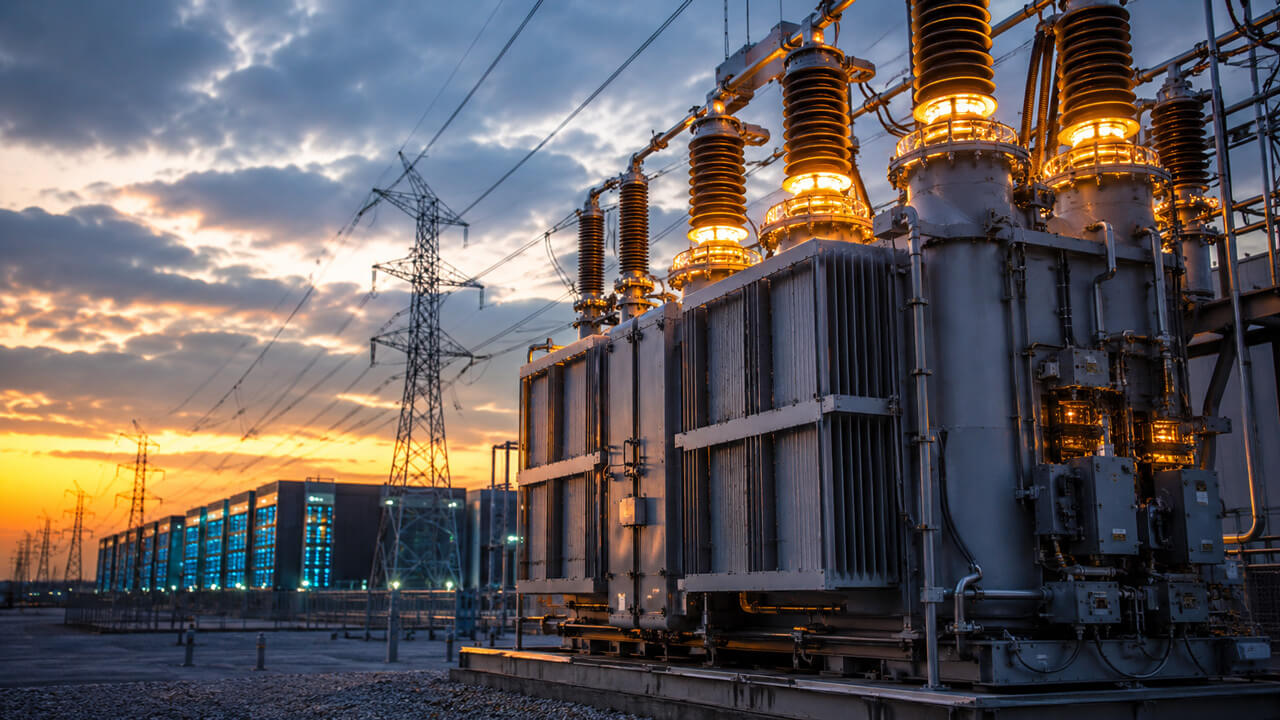

AI has hit an electricity problem. Running it takes staggering amounts of power; demand in the US is climbing faster than the grid can keep up, and that’s handing enormous leverage to the companies that generate and deliver it.
On June 2, the Electric Reliability Council of Texas voted to overhaul how it admits large power users to the grid, wading through a backlog of data centers, crypto mines, and industrial sites all reaching for the same megawatts.
That same week, lawmakers in Albany, New York, were racing to pass a one-year moratorium on new large-scale data centers, which could make the state the first in the country to pause the buildout outright.
The companies training frontier models keep running into a wall built from copper, concrete, and regulatory patience. The beneficiary of all that demand is the unglamorous entity at the other end of the wire: the utility, the grid operator, the power producer that decides who gets electricity, when, and at what price.

Electricity became the scarcest asset for AI
For most of the past decade, every conversation about AI revolved around software, and the most important constraint people were worried about was the supply of advanced GPUs.
Now, the conversation has shifted to industrial economics, and the limiting inputs are land, generation capacity, water, high-voltage transformers, and local boards.
Goldman Sachs expects US data center power demand to climb from 31 gigawatts in 2025 to 41 in 2026 and 66 in 2027, lifting data centers’ share of US peak summer demand from 4.1% to 8.5% over the same stretch.
However, the bank noted that only about 50% to 60% of the capacity scheduled over the next year or two is likely to arrive on time, due to delays and cancellations. Even when discounted, the grid is being asked to absorb in two years what it usually takes a decade to add.
The International Energy Agency projects that data center electricity use will roughly double by 2030, while demand from AI-focused facilities will triple. Its report leans hard on the bottlenecks, from tightening supply chains for gas turbines and transformers to grid connections that take years and a rush toward on-site generation that mostly remains on paper.
Power companies now have an unbelievable amount of leverage. A utility collects regardless of which company wins the race; all it needs is for the race to keep demanding more power. Regulated utilities earn returns on approved capital spending, so a wave of grid upgrades becomes a wave of rate-based revenue.
Independent power producers sell into a tighter market but at higher prices. Grid operators, holding a finite stock of connection capacity, become the gatekeepers who decide which projects are viable.
Texas shows how gatekeeping turns into rules. Under Senate Bill 6, ERCOT is now using a “pay your own way” model that loads interconnection costs onto large customers and forces them to stand down during emergencies, with a non-refundable $ 50,000-per-megawatt fee and steep deposits to weed out speculative claims.
The strain is hard to overstate, since nearly 200 large users lined up in the first months of 2026 alone, together seeking a combined 438 gigawatts, more than five times what the entire state currently draws.
New York’s proposed pause approaches the same problem from the political flank, weighing AI data center growth against household bills, water use, and grid reliability. Electricity has become a rationed input, and the parties doing the rationing now have the strongest hand at the table.
Bitcoin miners saw this fight first, and now everyone pays
The Bitcoin market is familiar with this bottleneck because it was the miners who first lived it. Mining built a business on cheap, interruptible power, using flexible load that switches off when the grid strains and soaks up surplus when prices crater.
That’s why Texas wrote its new demand-response programs around it, and why miners spent years chasing wasted watts into windy plateaus and hydro spillways where energy often sat stranded and was cheap. Some analysts go further and argue the grid should welcome that flexibility as a service, given how fast miners can curtail.
That’s almost the exact opposite of what AI wants and needs. Hyperscalers want steady, always-on power and long-term certainty, backed by jobs and national-competitiveness arguments that carry real political weight. When BlackRock warned this January that AI data centers could consume as much as 24% of US electricity by 2030, it effectively declared the cheap-power truce over.
A CryptoSlate analysis comparing energy footprints across streaming, AI, and crypto reached a similar verdict, with miners now facing a tight squeeze as AI firms bid up the price of firm supply.
The power company is now arbitrating that fight, and profiting from it whichever way it breaks.
Should utilities build out generation and transmission to serve AI hyperscaler demand, ratepayers can end up absorbing part of the cost unless regulators ring-fence those expenses or compel large loads to cover their own share.
The federal forecast already leans that way, with the EIA expecting US power use to set fresh records in 2026 and 2027. Residential prices have already increased 5% in 2026, with the sharpest increases landing along the East Coast.
AI promised abstraction, intelligence rendered as weightless, infinitely copyable software. Its expansion has made electricity the scarce commodity that determines who gets to scale, who gets priced out, and who collects a check, no matter which company captures most of the market. The companies will keep chasing the headlines, while the power company keeps a steady hand on the meter.