

Close Menu
    Facebook X (Twitter) Instagram
    • Privacy Policy
    • Terms Of Service
    • Social Media Disclaimer
    • DMCA Compliance
    • Anti-Spam Policy
    Facebook X (Twitter) Instagram
    Deep Tech Ledger
    • Home
    • Crypto News
      • Bitcoin
      • Ethereum
      • Altcoins
      • Blockchain
      • DeFi
    • AI News
    • Stock News
    • Learn
      • AI for Beginners
      • AI Tips
      • Make Money with AI
    • Reviews
    • Tools
      • Best AI Tools
      • Crypto Market Cap List
      • Stock Market Overview
      • Market Heatmap
    • Contact
    Deep Tech Ledger
    Home»AI News»Novel method detects microbial contamination in cell cultures | MIT News
    Novel method detects microbial contamination in cell cultures | MIT News
    AI News

    Novel method detects microbial contamination in cell cultures | MIT News

    April 29, 20254 Mins Read
    Share
    Facebook Twitter LinkedIn Pinterest Email
    kraken


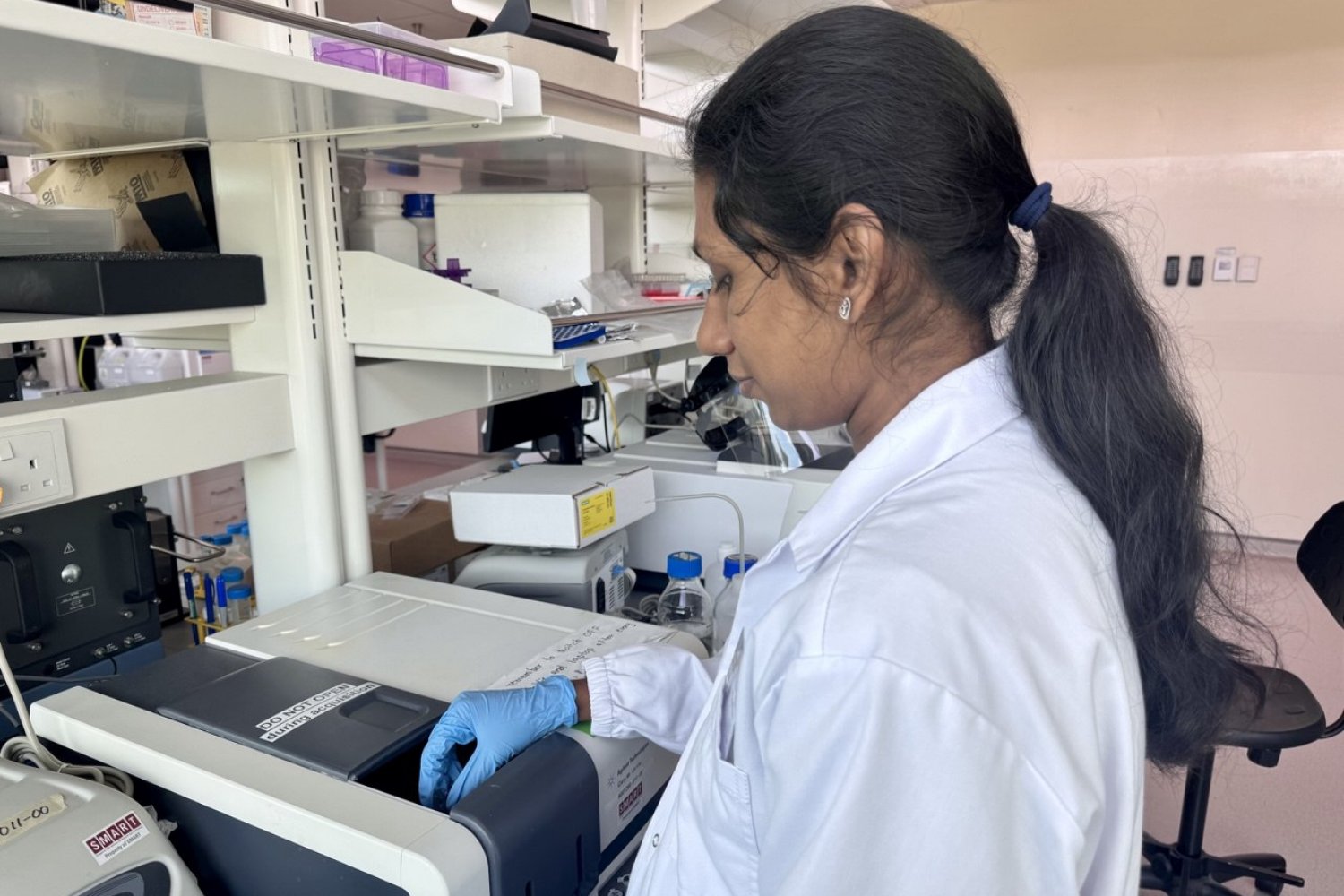
    Researchers from the Critical Analytics for Manufacturing Personalized-Medicine (CAMP) interdisciplinary research group of the Singapore-MIT Alliance for Research and Technology (SMART), MIT’s research enterprise in Singapore, in collaboration with MIT, A*STAR Skin Research Labs, and the National University of Singapore, have developed a novel method that can quickly and automatically detect and monitor microbial contamination in cell therapy products (CTPs) early on during the manufacturing process. By measuring ultraviolet light absorbance of cell culture fluids and using machine learning to recognize light absorption patterns associated with microbial contamination, this preliminary testing method aims to reduce the overall time taken for sterility testing and, subsequently, the time patients need to wait for CTP doses. This is especially crucial where timely administration of treatments can be life-saving for terminally ill patients.


    Cell therapy represents a promising new frontier in medicine, especially in treating diseases such as cancers, inflammatory diseases, and chronic degenerative disorders by manipulating or replacing cells to restore function or fight disease. However, a major challenge in CTP manufacturing is quickly and effectively ensuring that cells are free from contamination before being administered to patients.


    Existing sterility testing methods, based on microbiological methods,  are labor-intensive and require up to 14 days to detect contamination, which could adversely affect critically ill patients who need immediate treatment. While advanced techniques such as rapid microbiological methods (RMMs) can reduce the testing period to seven days, they still require complex processes such as cell extraction and growth enrichment mediums, and they are highly dependent on skilled workers for procedures such as sample extraction, measurement, and analysis. This creates an urgent need for new methods that offer quicker outcomes without compromising the quality of CTPs, meet the patient-use timeline, and use a simple workflow that does not require additional preparation.

    aistudios


    This method offers significant advantages over both traditional sterility tests and RMMs, as it eliminates the need for staining of cells to identify labelled organisms, avoids the invasive process of cell extraction, and delivers results in under half-an-hour. It provides an intuitive, rapid “yes/no” contamination assessment, facilitating automation of cell culture sampling with a simple workflow. Furthermore, the developed method does not require specialized equipment, resulting in lower costs.


    “This rapid, label-free method is designed to be a preliminary step in the CTP manufacturing process as a form of continuous safety testing, which allows users to detect contamination early and implement timely corrective actions, including the use of RMMs only when possible contamination is detected. This approach saves costs, optimizes resource allocation, and ultimately accelerates the overall manufacturing timeline,” says Shruthi Pandi Chelvam, senior research engineer at SMART CAMP and first author of the paper.


    “Traditionally, cell therapy manufacturing is labor-intensive and subject to operator variability. By introducing automation and machine learning, we hope to streamline cell therapy manufacturing and reduce the risk of contamination. Specifically, our method supports automated cell culture sampling at designated intervals to check for contamination, which reduces manual tasks such as sample extraction, measurement, and analysis. This enables cell cultures to be monitored continuously and contamination to be detected at early stages,” says Rajeev Ram, the Clarence J. LeBel Professor in Electrical Engineering and Computer Science at MIT, a principal investigator at SMART CAMP, and the corresponding author of the paper.


    Moving forward, future research will focus on broadening the application of the method to encompass a wider range of microbial contaminants, specifically those representative of current good manufacturing practices environments and previously identified CTP contaminants. Additionally, the model’s robustness can be tested across more cell types apart from MSCs. Beyond cell therapy manufacturing, this method can also be applied to the food and beverage industry as part of microbial quality control testing to ensure food products meet safety standards.



    Source link

    binance
    Share. Facebook Twitter Pinterest LinkedIn Tumblr Email
    CryptoExpert
    • Website

    I’m someone who’s deeply curious about crypto and artificial intelligence. I created this site to share what I’m learning, break down complex ideas, and keep people updated on what’s happening in crypto and AI—without the unnecessary hype.

    Related Posts

    Automating portfolio trading with AI

    June 14, 2026

    Anthropic Disables Claude Fable 5 and Mythos 5 After US Government Order

    June 13, 2026

    Jinhua Zhao named head of the Department of Urban Studies and Planning | MIT News

    June 12, 2026

    Microsoft’s open-source SkillOpt automatically upgrades AI agent skills without touching model weights

    June 11, 2026
    Add A Comment
    Leave A Reply Cancel Reply

    bybit
    Latest Posts

    Metaplanet to Launch Bitcoin Yield Products by Acquiring Siiibo Securities

    June 14, 2026

    Whale Opens $22.3M SPCX Long as Synthetic Price Hits 30% premium

    June 14, 2026

    I Asked Claude The Best Way To Make As Much Money As Possible

    June 14, 2026

    How to Make Your First AI Movie (Full Guide)

    June 14, 2026

    Make Viral Toy Tractor Engineering Videos Using AI | Full Beginner Guide 2026

    June 14, 2026
    aistudios
    LEGAL INFORMATION
    • Privacy Policy
    • Terms Of Service
    • Social Media Disclaimer
    • DMCA Compliance
    • Anti-Spam Policy
    Top Insights

    TRM Warns of World Cup Crypto Scams Targeting Fans

    June 15, 2026

    Switzerland Rejects Controversial 10 Million Population Cap in Historic Referendum

    June 15, 2026
    coinbase
    Facebook X (Twitter) Instagram Pinterest
    © 2026 DeepTechLedger.com - All rights reserved.

    Type above and press Enter to search. Press Esc to cancel.